Sports API
Live sports data
₹35,000/month
- Real-time scores & fixtures
- Live odds (Match Odds, Bookmaker, Fancy)
- Multiple sports coverage
- Clean JSON + webhooks
- Documentation & sandbox


SPORTSBOOK DATA INFRASTRUCTURE
Real-time odds, wallet sync and low-latency data feeds for licensed operators.
Choose the plan that fits your platform. All plans include documentation and integration support.
Live sports data
Complete suite
Casino & live games
Ready-to-integrate APIs for sportsbook, casino and iGaming platforms.
Real-time markets, odds & wallet for sportsbook platforms.
YOU'RE HERELive scores, fixtures & odds across multiple sports.
Learn more →Casino game data & live casino integration.
Learn more →Ball-by-ball cricket data, scores & odds.
Learn more →Secure deposits, withdrawals & balance management.
Learn more →Multiple game providers through one integration.
Learn more →Separate source connectivity from application logic. The incoming feed supplies approved market updates; your backend interprets those updates, maintains application state and delivers information to clients. Document identifiers, timestamps and market-state transitions so the boundary between systems is explicit.
For real-time odds integration, define freshness thresholds and recovery behaviour as carefully as the normal update path. Wallet records, commission rules and exposure checks need their own contracts and tests. Confirm source coverage and permissions rather than treating all market types as interchangeable.
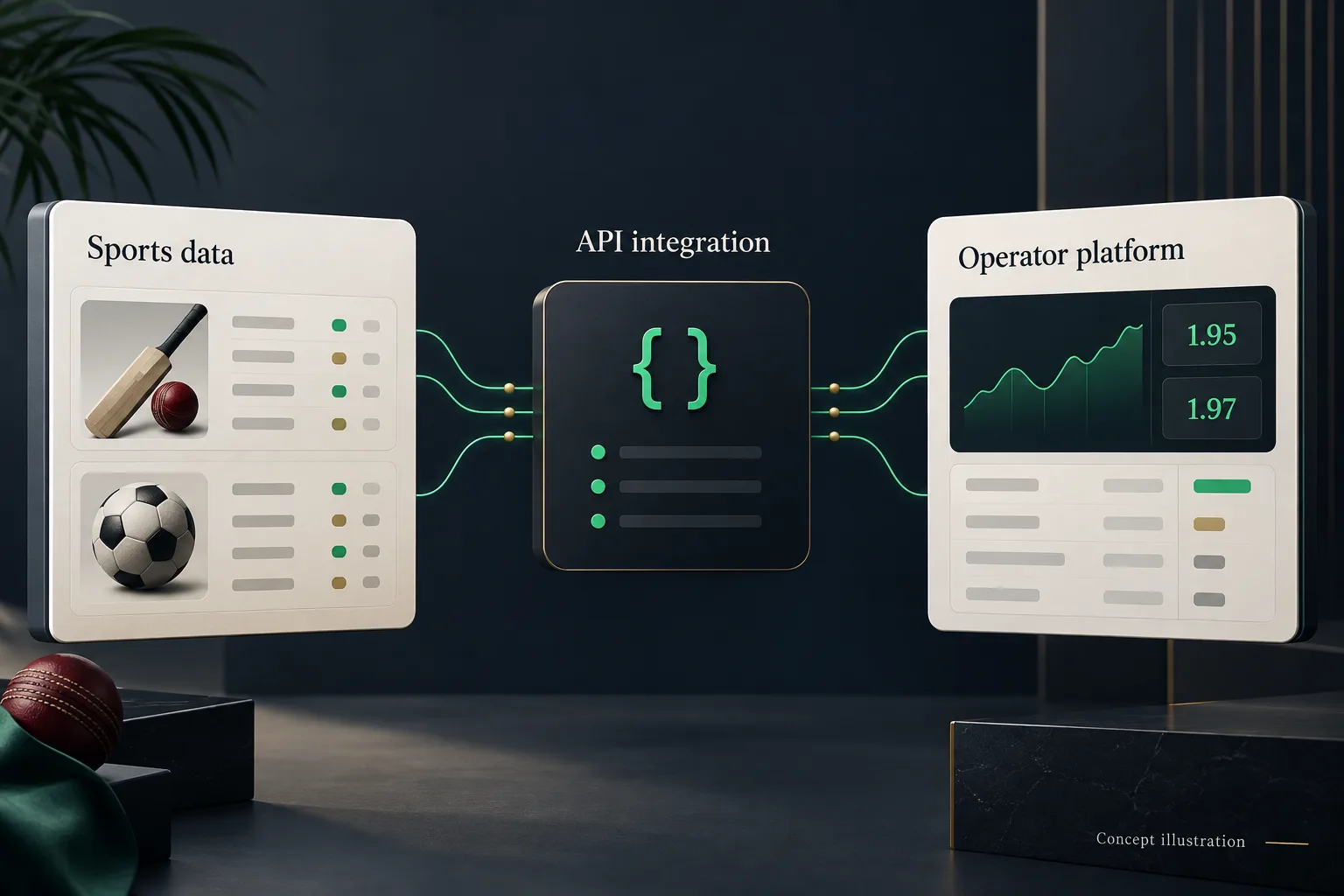
FROM FEED TO PLATFORM
A dependable integration needs clear boundaries between the source feed, your backend and the operator interface. Plan those connections before implementation.
The engineering discussion covers feed handling and the operational workflows around it. Use the following checklist to agree scope with Itrifid: what the source provides, what the backend must implement, and how the result will be tested. It is a planning framework, not a claim that every feature is included by default.
Map event IDs, market IDs, price formats and source timestamps before connecting a feed. Define when an update is stale and how the application handles a suspended market. Available sports and update behaviour depend on the approved upstream access.
Separate incoming odds from order acceptance and matching logic. Agree the rules for duplicate requests, price changes, suspended markets and rejected actions. Test these transitions before enabling an automated workflow.
Use unique transaction references and explicit state transitions for credits, debits and adjustments. Plan reconciliation between platform records and the source system; retries must not create duplicate balance changes.
Define exposure limits, alert thresholds and review permissions for the intended operating model. Record why a rule triggered and how an operator resolved it. Monitoring assists review; it does not guarantee fraud prevention.
Separate account management, reporting and operational actions by role. Specify which changes require approval, and retain an audit trail for changes to limits, commission settings and market access.
Estimate concurrent connections and peak update volume. Select queueing, caching and storage behaviour around those estimates, then test under representative load. Capacity and latency should be measured in the intended hosting environment.
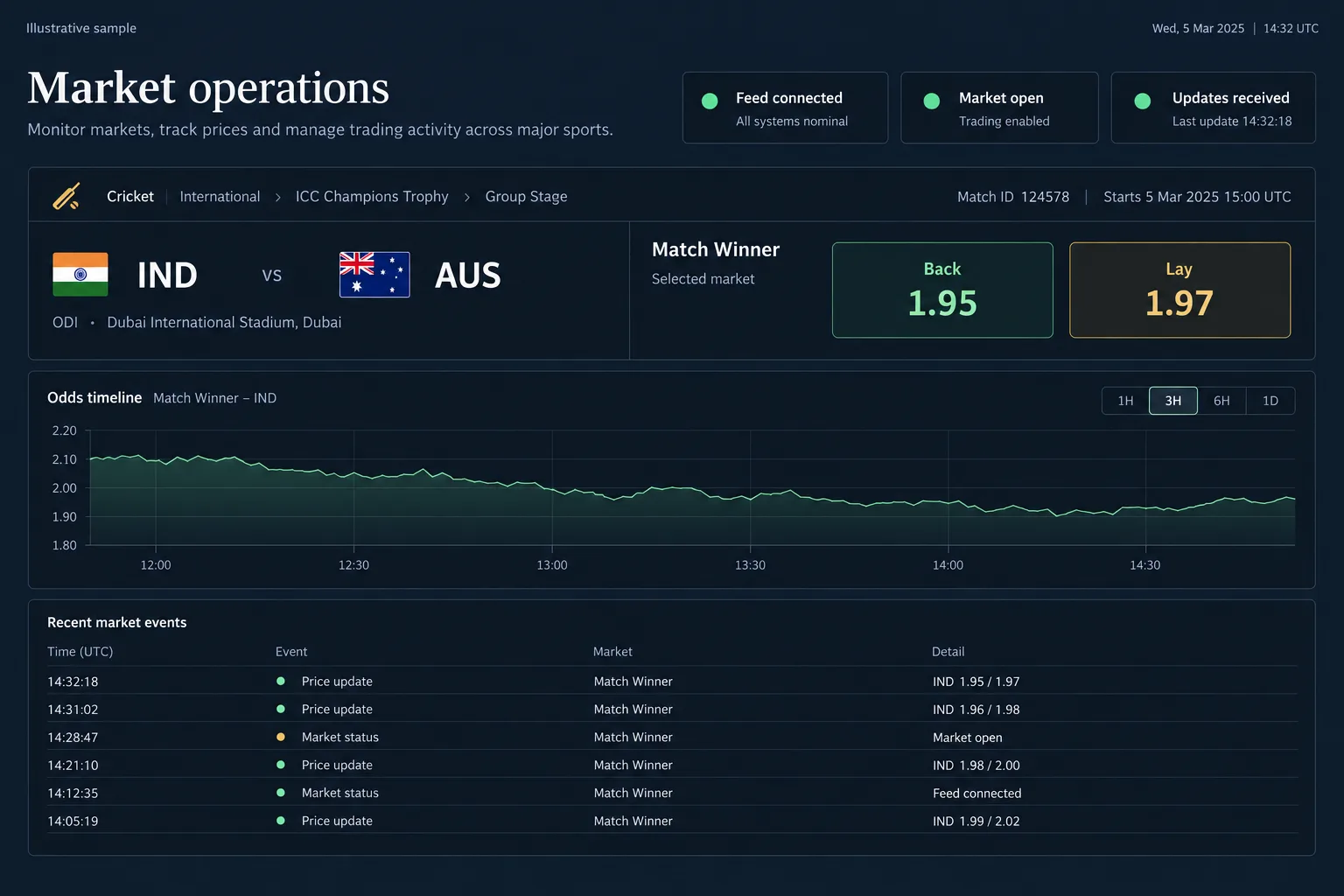
MARKET OPERATIONS
Define how the operator interface communicates fresh, delayed and suspended market states.
Available work includes new platform development, adapters for existing systems, market-specific modules and agreed maintenance. Confirm interfaces, coverage and exclusions in the scope. Source documentation takes precedence over a general service description.
For a new platform, define service boundaries, account workflows and reporting requirements before implementation. Decide which functions belong to the data source and which must be built in your backend.
Review the current web or mobile application, credentials and API contracts. Map identifiers and error responses explicitly so a source change does not silently alter application behaviour.
Cricket, football, tennis, casino, fancy and session workflows need their own coverage and state-mapping review. A listed module is not a guarantee that every market or provider is included in the subscription.
Agree responsibility for feed changes, monitoring, incident triage and version upgrades. Document escalation contacts and support scope before release; response commitments belong in the service agreement.
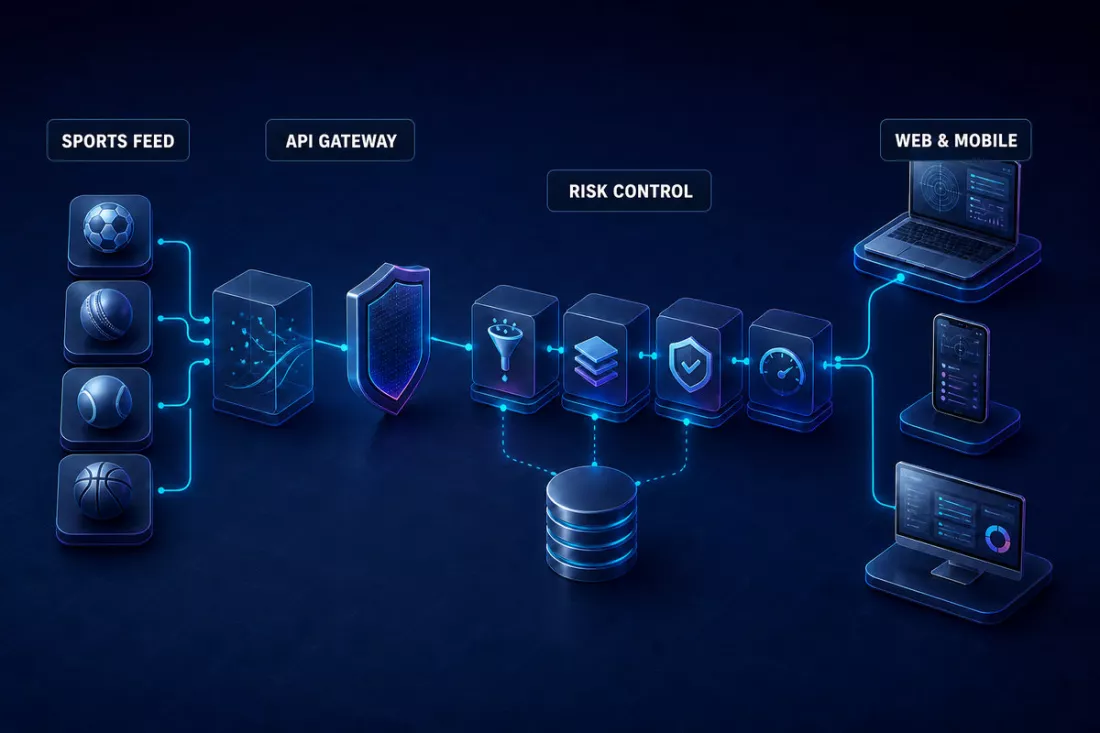
INTEGRATION BOUNDARIES
Give each module a clear contract so a source change does not silently alter downstream behaviour.
Plan the feed contract, performance checks and failure handling before connecting your production platform.
Low-latency delivery is a design objective, not a published benchmark. Confirm WebSocket availability and the transport supported by your approved feed before implementation.
Measure source-to-client delay under representative load. Agree reconnect behaviour, stale-message thresholds and monitoring with the integration team.
No verified latency or uptime figure is published here. Any performance commitment must be defined in the agreed service scope.
{
  "event_id": "EV-98234",
  "sport": "Cricket",
  "match": "IND vs AUS",
  "market": "Match Winner",
  "odds": { "back": 1.95, "lay": 1.97 },
  "timestamp": "2026-09-09T08:30:00Z"
}
Sample values only; this is not current match data or a guaranteed response schema. Confirm field names, identifiers, odds format and timestamp semantics against the supplied integration documentation.
Begin with a review of the current system and approved source interfaces. Record the expected event flow, failure cases and account-state transitions. An implementation estimate should follow that review, with dependencies and acceptance criteria documented for each milestone.
Before release, test reconnects, duplicate messages, permission failures and reconciliation. Agree how a failed deployment will be rolled back and who owns incident triage. Post-launch monitoring and maintenance are subject to the support arrangement; they are not an unlimited service commitment.

RELEASE READINESS
Include accounting and recovery scenarios in acceptance testing, not just the successful request path.
This approach is relevant to teams building a new exchange platform or replacing part of an existing sportsbook backend. Before selecting a feed, identify required sports, peak usage, account flows and the systems that must remain compatible. Check coverage and source rights for the intended market.
Security requirements span the feed adapter, application backend and administrative interface. Review access, logging and sensitive-data handling for the actual deployment. The checklist below describes controls to specify and test, not a certification or a guarantee that every risk is eliminated.

ACCESS & MONITORING
Connect monitoring signals to clear permissions and a documented response process.
These illustrative scopes explain how work can be divided into testable components. They are not customer endorsements or evidence of completed deployments. Each real project requires its own coverage, technical and commercial review.
An example scope connects cricket market updates to account records, exposure checks and reconciliation reports. Validate market suspension, delayed updates and settlement corrections with agreed test cases.
An existing platform may need a new feed adapter, clearer permissions and better event logging. Document old and new behaviour and use a staged rollout to reduce release risk.
For multiple sources, agree identifier mapping, supported markets and error semantics for each adapter. These are planning examples, not named client case studies or verified delivery outcomes.
Share your architecture, required markets and the next release objective. A technical discussion can identify interface dependencies and the information needed for a scoped proposal. Keep production credentials out of public messages.
It connects supported exchange data to a platform backend. Source access determines the available markets and interfaces; wallet, administrative and reporting functions may require separate implementation.
Share the current architecture, source documentation, required markets and expected usage. Do not send production credentials through a public contact form. Agree a secure access process separately.
Compatibility depends on the current codebase and available interfaces. A review identifies adapter work, data mapping and changes needed before an implementation estimate is agreed.
Confirm coverage with the approved source. Cricket, football, tennis, casino, fancy and session workflows may have different access requirements and are not automatically included as a single feed.
Agree heartbeat and reconnect behaviour, stale-data thresholds and sequence handling. Test recovery after a connection loss and define when the application should stop using old prices.
Define unique references, accepted states and reconciliation reports. Test retries, duplicate events and corrections against the agreed accounting rules before release.
No. Alerts and exposure controls support operational review. Their effectiveness depends on the rules, data quality and the team's response process.
Role definitions and permitted actions can be part of the agreed development scope. Document approval requirements and audit records for sensitive account or limit changes.
Source access, interface documentation, the existing codebase and acceptance testing affect the schedule. Confirm milestones after technical discovery rather than assuming a fixed launch date.
Confirm source rights, operating requirements, hosting allocation and maintenance responsibilities in the quotation. Serving a region technically does not establish permission to operate there.
GST, setup and hosting included. Confirm deliverables, capacity, hosting duration and support in your written quotation.